How to Stop Overworking and Break the Hard Work Trap
Growing up in a family where hard work was overvalued, I carried that exact pattern straight into my career. I was not consciously telling myself to overfunction or pick up extra responsibilities every day. I just walked into the office thinking, how can I be helpful? Where can I add value?
So I became the reliable one. The available one. The person who could figure anything out. For the first 15 years of my career, I hung my hat on hard work and sheer effort, believing that if I just gave more, people would see how good I was.
That way of operating looks like success from the outside, but it is a trap that leads straight to exhaustion. If you want to protect your capacity, here are three workplace patterns you need to start catching today.
Catch the “I’ll Just Do It” Reflex
Something comes up at work. A customer walks in unannounced, a team member gets confused, or a vague task appears that nobody owns. Before anyone else even has time to process the situation, you jump in.
I’ll just do it.
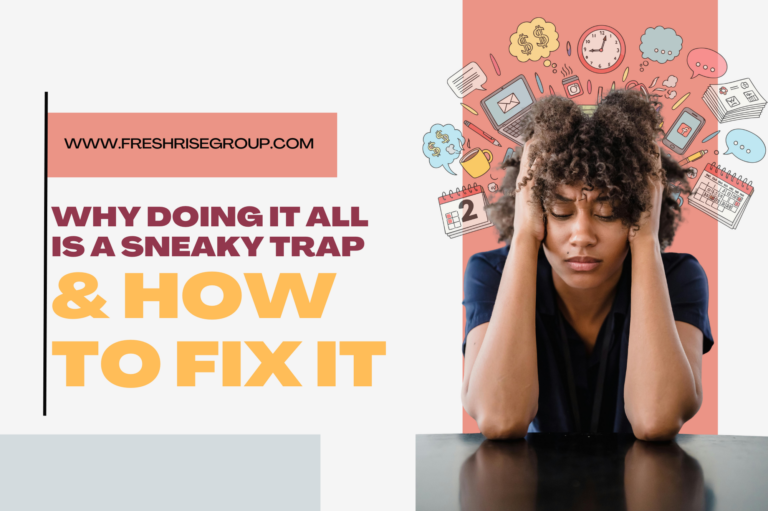
It seems small in the moment, but those quick additions build up. By Friday, that single reflex has added 20 extra tasks to your plate.
Your brain tells you that it is faster if you do it yourself, or that you should be the helper. To break this reflex, you have to create a gap between the thought and your physical response.
- Try the 10-second pause: When you feel the urge to volunteer, count to ten silently before speaking.
- Ask the critical question: Does this task truly require my specific skills and expertise, or could someone else step in and grow from taking it on?
Being capable of carrying something does not mean it needs to be yours to carry.
I also think it’s really helpful to look at the bigger body of research about what engaged employees report keeps them engaged. According to Employee Engagement research from Gallup, engaged employees indicate that “someone in their
company encourages their development”. Practicing the pause could be the moment a newer professional gets an opportunity for growth.
Stop Turning Assignments Into Auditions
Notice when you are doing way more than anyone actually asked for. For example, you are asked to create a quick one-page summary of the project, but instead, you reorganize the entire document, fix someone else’s section, and design a brand new template for future use.
We tell ourselves that making it extra good will prove our value, prevent endless meeting tweaks, or get us noticed for higher level asks. But nobody asked for those extra layers of effort, and you are not going to get extra points for spending extra hours perfecting it. If it’s important enough to change, bring up the issues and let the team determine how to move forward.
Before broadening the scope of any task, pause and ask yourself:
-What was actually requested?
-What is the outcome that actually matters here?
-What does “done enough” look like for this specific task?
Stop when you reach done enough. Your work can be valuable and useful without every single assignment being proof of your worth. Check in with yourself if you often catch yourself doing more than asked. What is this actually about?
Move From Sole Doer to Strategic Guardrail
When a team project is underway, it is easy to take on full emotional ownership of the entire outcome. You monitor everything, get hypervigilant about where things might fall apart, and constantly follow up, remind, and manage communications.
Holding all that responsibility drives your cortisol through the roof, and it often creates a bottleneck where everyone is stuck waiting on you. Full transparency – I know this from experience but didn’t always realize it then!
In mid-career leadership, value cannot be measured by how much you can personally carry. It is about making sure the right people are carrying the right tasks toward the right outcomes.
Let the team or the organization own the outcome. Position yourself as the guardrail that provides clarity, sets expectations, and gives people room to develop confidence on their own.
Doing good work matters, and being dependable is a great quality. But at some point, your value cannot continue to be measured in a way that doesn’t serve you, your company, or your energy level for tackling the bigger stuff.
When helping turns into over-responsibility, it becomes a heavy burden. It uses our energy up for work too quickly. Step back, recalibrate, and start building a way of working that feels peaceful, sustainable, and kind to yourself.
Keep shifting away from workplace stress and bring ease back into your daily routine – Grab our free download to Add Joy at Work to get practical, simple strategies to build your capacity today.
Sarah Rose is a workplace well-being coach, recovering over-worker, married mother of 2, and founder of Fresh Rise Group. She helps maxed-out mid-career women who are juggling approximately 47 roles (but only getting paid for one or two) reclaim their energy, boundaries, and confidence without quitting their entire lives. A former “good girl” turned possibility pusher, Sarah challenges long-held beliefs about productivity and being good, but also teaches quick, doable strategies that work even on days when your brain feels like mush.